
How to Research Instagram Ads Competitors Without Guessing What's Working
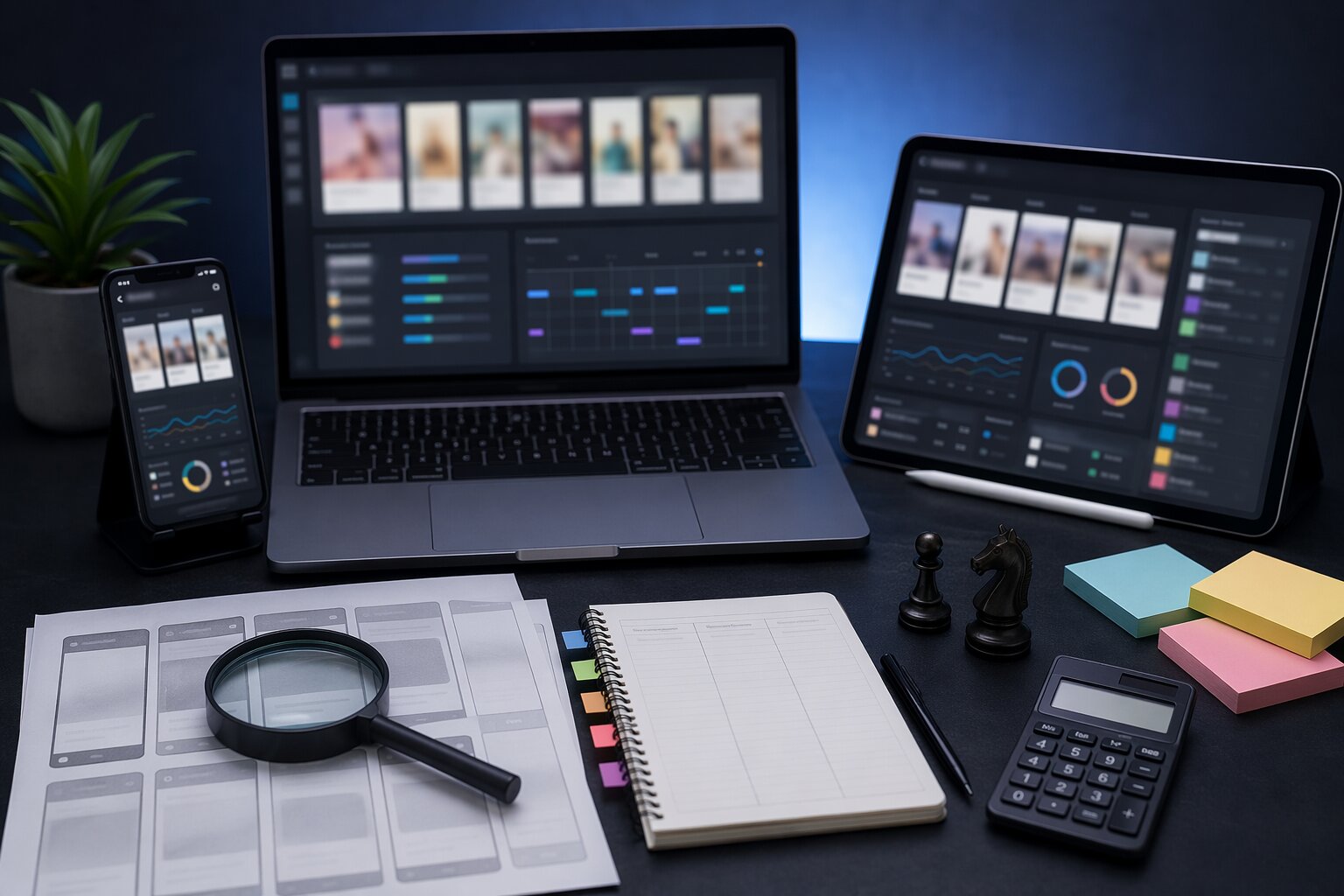
You don’t have to guess which Instagram ads are working, you can see them. By using Meta’s Ad Library and a small set of focused tools, you can reverse-engineer live campaigns, spot the offers competitors keep paying to run, and separate proven hooks from noise. The key is treating ad research like a system, not a scroll. Once you do, you’ll start noticing patterns that most marketers miss, and that’s where things get interesting.
Stop Guessing: What Instagram Ad Research Really Is
The core task in Instagram ad research isn't identifying “secret keywords” or copying isolated ads you happen to see. It's a structured review of Meta’s Ad Library to identify which creatives, hooks, and offers have remained active for a sustained period. Many marketers now use an instagram ad library search process as a routine part of campaign planning, helping them spot patterns in messaging and creative formats that consistently stay in circulation.
A practical approach is to filter for direct competitors and record ads that have been running for 30–90 days or longer. While not a guarantee of profitability, longer-running ads often indicate that advertisers consider them effective enough to keep active. Treat those start dates as a rough performance signal rather than definitive proof.
It is also useful to distinguish between paid and organic activity. Review the paid layer (Meta Ad Library) separately from the organic layer (Reels, carousels, Stories on public profiles). On a recurring basis, such as every 3–4 weeks, return to your saved examples and identify recurring hooks, calls to action, offers, formats, and landing-page approaches. Over time, these patterns can inform your own testing roadmap and creative strategy.
How the Instagram Ad Library Actually Works
Although it appears as a simple search box, Meta’s Instagram Ad Library is a public database of paid ads running across Instagram and Facebook, designed primarily for transparency and regulatory compliance rather than performance analysis.
It doesn't include organic content such as Reels, carousels, feed posts, or Stories; it only displays paid advertisements.
Users can search by advertiser or business name, then filter by country and platform to focus on Instagram placements.
Setting the status filter to “Active” helps limit results to currently running ads.
Because Meta doesn't disclose metrics such as spend, conversions, or return on ad spend (ROAS), analysis is limited to observable elements.
To infer strategy, you can sort by ad start date and review what's publicly visible: the creative format, opening hook, ad copy, call to action, and the landing page being promoted.
Paid vs. Organic Instagram Ads (And Why Both Matter)
Meta’s Ad Library shows you which ads brands pay to promote and when those ads started running, but it provides only a partial view of performance.
You can infer that longer‑running ads may be effective, yet you can't see key metrics such as spend, return on ad spend (ROAS), or detailed targeting parameters.
Organic Instagram content helps fill in those gaps.
Reels, carousels, standard posts, and Stories don't appear in the Ad Library, so you must review brand feeds directly to understand their unpaid strategy.
Many advertisers use organic posts as a testing environment for hooks, creative formats, and calls to action.
Content that consistently performs well organically is then more likely to be scaled through paid campaigns.
You can connect paid and organic insights by comparing the messaging and creative elements of active ads with high‑engagement organic Reels and posts.
This cross‑checking approach helps identify themes and formats that resonate repeatedly with audiences, while reducing the risk of drawing conclusions from isolated examples or single screenshots.
Build Your Instagram Ad Competitor List and Cadence
A defined competitor list keeps Instagram ad research manageable and useful.
Begin by selecting 3–5 relevant industry or audience keywords and associated hashtags, then identify 5–10 brands that appear regularly with paid ads. For each brand, document the exact advertiser name you'll search and apply an “Active ads” filter so you only review campaigns currently running.
Set a review cadence of every 3–4 weeks. Give priority to creatives that have been running for 30 days or more, as they're more likely to indicate effective messaging or offers.
Track changes over time by saving searches, recording new creatives, and noting landing-page URLs.
Expand your competitor list when you observe recurring hooks, messages, or offers across multiple active ads from different brands, as this can signal broader patterns in the market.
Step 1: Use Instagram Ad Library to Find Live Ads
Filter by country and, where possible, by platform so you review Instagram ads targeting the same geography that's relevant to you.
Sort by ad start date and note ads that have been running for 30–90 days or longer; sustained runtime is a practical indicator that the ad is likely performing adequately enough to be maintained.
For each ad, record the creative format (image, carousel, video, etc.), the on-ad call to action, and the type and structure of the landing page (for example, direct-response sales page, lead form, or content-focused page).
Step 2: Analyze Instagram Ad Creatives for Performance Clues
Once you’ve pulled a list of live Instagram ads from the Ad Library, the next step is to review the creatives systematically and look for indicators of performance.
Filter for Instagram placement, select “Active,” then sort by oldest first.
Ads that have been running for 30–90 days or more are likely to be stronger performers, as they're being kept in rotation.
For each ad, record the creative type (image, carousel, video), the on-screen hook or first line of copy, the CTA button, and the offer in a simple spreadsheet.
Note the destination URL structure to see whether the brand is directing traffic to quizzes, product pages, or email capture flows, as this can indicate their optimization priorities.
If a brand relies heavily on video, pay particular attention to the first three seconds, as this is where they're most likely concentrating their efforts to capture attention and reduce early drop-off.
Step 3: Study Competitors’ Organic Instagram to Fill the Gaps
Even though Meta’s Ad Library shows which creatives competitors pay to promote, it doesn't reveal the full scope of their creative testing, particularly their organic Reels.
These Reels often function as a low-cost environment for testing concepts, hooks, and formats before they're used in paid campaigns.
To analyze this, open each competitor’s Instagram profile, navigate to their Reels or video tab, and review content performance by engagement (likes, comments, shares, and views where visible).
Identify posts that substantially outperform their typical baseline.
For those Reels, review the first line of on-screen copy or caption and document the underlying hook structure (for example, question-based, problem statement, bold claim), rather than focusing only on specific wording.
In addition, track changes in creative format over time, such as studio production versus user-generated content, or lifestyle storytelling versus direct problem–solution demonstrations.
Maintain a weekly log of the top-performing Reels across competitors, including their hooks, formats, and topics.
Over time, this record can help you identify consistent patterns and gaps in your own content strategy.
Advanced: Use Brandsearch to Supercharge Instagram Ad Research
After manually reviewing competitors’ organic Reels, you can streamline the process with Brandsearch. In Brandsearch Discovery, select the Instagram tab, filter for Video, and sort by engagement. This helps you identify organic Reels that have performed well and may be suitable models for future paid ads.
Next, go to Brand Analysis → Scripts to access AI‑transcribed hooks and script structures from top-performing paid video ads. Compare these with hooks identified in the Meta Ad Library and with your list of high‑engagement organic Reels to see which patterns recur across formats and brands.
Based on this comparison, extract three verbatim hooks that consistently appear in high‑performing creatives, define two to three common funnel patterns (for example, problem–agitation–solution or testimonial–proof–offer), and create one concise creative format thesis. This thesis should summarize the key structural and messaging elements you intend to test in your next round of ad validation.
Turn Competitor Instagram Ad Insights Into Testable Campaigns
When moving from research to implementation, use competitor Instagram ads as inputs for structured experiments rather than copying them directly.
Begin with Meta Ads Library, filter for Instagram placements and active ads, and identify creatives that have been running for 30–90+ days as potential strong performers.
Break each ad into key variables: hook (the exact first line), call to action, offer type, and landing-page format.
Compare recurring hooks with high-engagement Reels to validate that the messaging resonates beyond paid placements.
Use the patterns you identify to create one creative brief per hook and test each variant with a controlled daily budget (for example, $30–50).
Scale campaigns that replicate competitors’ proven structural elements—such as hook and CTA frameworks—while ensuring that your visuals, copy, and landing pages remain original and aligned with your brand.
Track Shifts in Competitor Instagram Ads Over Time
Track changes in ad formats over time, noting shifts between single-image, carousel, and video creatives, as well as their placements (e.g., Feed, Stories, Reels).
Monitor the evolution of hook and call-to-action (CTA) copy over a period of roughly 90 days, and categorize messaging angles such as discount-driven, value-based, or problem-solution oriented.
Compare these paid creatives with the brand’s top-performing organic Reels to identify whether successful themes, visuals, or messages are being replicated in ads.
Record ad launch dates, observe rotation frequency, and document when specific creatives are paused or replaced.
Use this data to outline campaign lifecycles, including typical durations, refresh intervals, and any patterns linked to seasonality or promotions.
Conclusion
When you stop guessing and treat Instagram ad research like a system, you give yourself an unfair advantage. Use the Ad Library and Brandsearch to see what’s actually running, then cross-check it with high-engagement Reels to understand why it works. Turn those patterns into specific hooks, offers, and landing pages to test—then keep tracking shifts over time. You’re not copying competitors; you’re reverse-engineering what works so you can beat it.
 English
 العربية
 Français
 Deutsch
 Italiano
 日本語
日本語 ಕನ್ನಡ
ಕನ್ನಡ Română
 Русский
 Español
 Türkçe